AI for the work around the code.
Engineers already have AI in their editor and do not need another one. What is missing is everything around the code: the incident write-up, the design doc nobody started, the answer buried in a runbook, and the query somebody files a ticket to get.
- Knowledge living in runbooks nobody can find at 2am
- Incident write-ups delayed because nobody wants to assemble the timeline
- Every team using different AI tooling with no shared governance
Six things engineering teams use this for.
Not an exhaustive list. These are the ones that come up first, and the ones that make the case for the rollout on their own.
Straight to the data, read-only.
Point StickyPrompts at a read replica through an SSH bridge, keep it read-only, and let people ask their own questions instead of filing tickets for queries.
See the full product tour- Every major model, so you are not tied to whichever one your editor ships with
- Remote MCP servers as first-class tools for agents and workflows
- SSH bridge to databases with no public endpoint
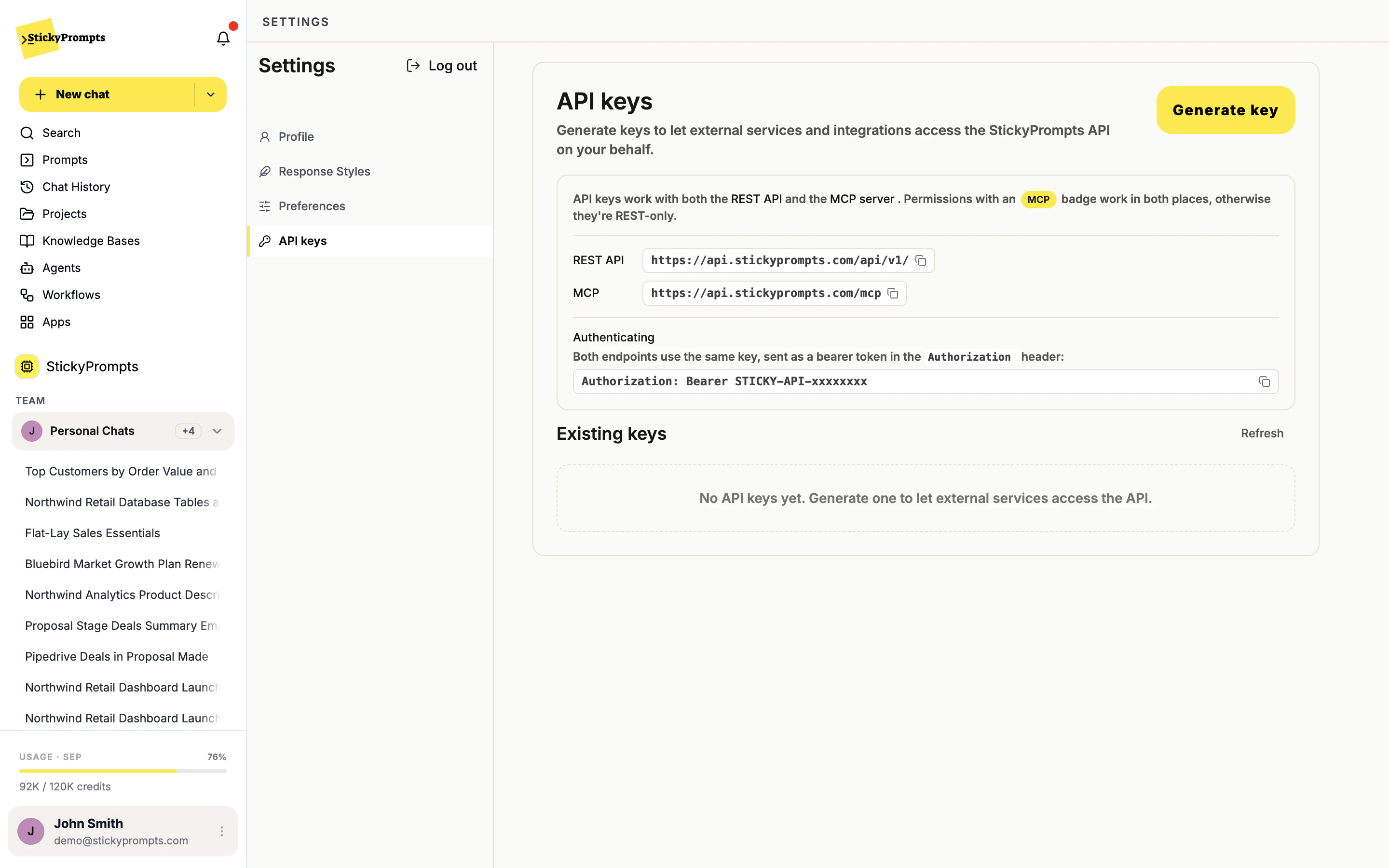
- A REST API and an MCP server, with one key for both
- Knowledge grounded in your own docs, with citations to check
- The same governance as the rest of the company, not a separate exception
What engineering teams ask us.
Does this replace our coding assistant?
No, and it is not trying to. Keep the editor assistant for writing code. This is for the work around it (documents, questions, incident write-ups, scheduled jobs) and for giving the rest of the company governed access to the same models.
Can we connect our own tools?
Yes. Remote MCP servers plug into agents and workflows, databases connect directly (including ones reachable only through an SSH jump host), and the REST API and MCP server let your own code call StickyPrompts.
Is our code used for training?
Switch on zero-data-retention only and the workspace uses only providers that keep nothing and train on nothing. If you would rather nothing left at all, open-weight models can run on infrastructure dedicated to you.
By team
Try it on your own work before you commit.
Start free with a $5 trial balance. No card, no procurement marathon - bring one real task and see how far it gets.